
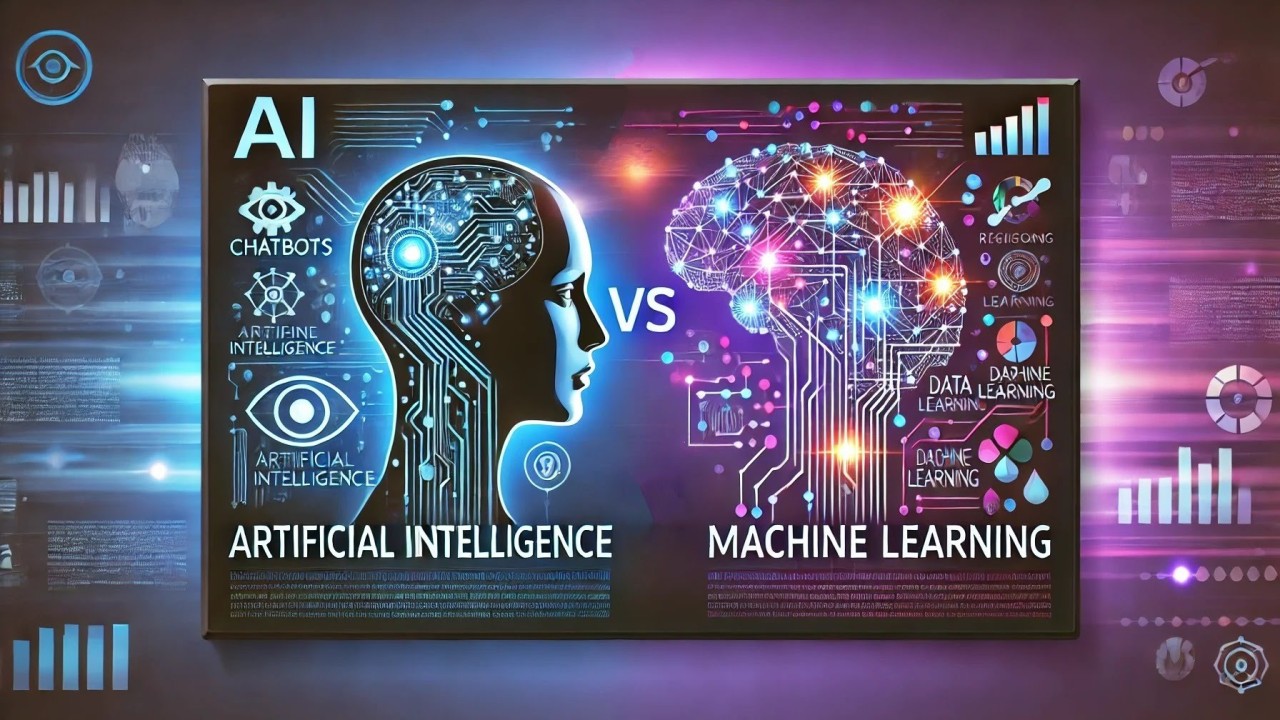
AI is the umbrella term, a field dedicated to creating machines that simulate human intelligence, and Machine Learning?
(This started with a friendly argument over drinks. Now it’s time to set the record straight.)
Recently, a friend and I debated the difference between Artificial Intelligence (AI) and Machine Learning (ML). Amid laughter and opinions flying, I realized many people use these terms interchangeably, often missing the nuances. So, let’s break it down.
AI is the umbrella term—a field dedicated to creating machines that simulate human intelligence. This means reasoning, learning, decision-making, and problem-solving. It’s all about building systems that think like humans.
Everyday examples of AI in action:
Machine Learning is a branch of AI, but it’s laser-focused on teaching machines to learn from data. It enables systems to improve performance over time—without needing constant programming tweaks.
Where ML shines:
Here’s how I explained it to my friend:
AI is the big picture—the goal of making machines act intelligently. ML is a tool used to reach that goal by training machines to recognize patterns and adapt. Think of AI as the chef, and ML as the recipe the chef follows.
AI doesn’t always rely on data, but ML can’t function without it. AI is about mimicking human intelligence; ML is about learning from experience.
This isn’t just semantics—it’s about understanding which technology to use and when.
The friendly argument ended up with my friend worshipping me ;-) Not really... but he paid for the drinks at the end.
(P.S. Share this post ♻️ if you found it helpful.)
About the Author
Axel Douchin is a Cloud, Data, and Artificial Intelligence (AI) executive and interim CIO, CTO, and Chief Data Officer specializing in complex digital transformation programs. With more than 20 years of international experience—including leadership roles in global technology initiatives and work with Amazon Web Services—he helps organizations design and execute large-scale cloud migrations, enterprise data strategies, and AI-driven platforms. His work focuses on data governance, scalable cloud architectures, and pragmatic approaches to deploying AI in regulated and high-complexity environments.
Topics: Cloud Strategy · Data Governance · Enterprise Data Platforms · Artificial Intelligence · Digital Transformation
More insights on Cloud, Data, and AI strategy:
www.douchinconsulting.com
#ArtificialIntelligence #MachineLearning #AIApplications #DataScience #DeepLearning #DigitalTransformation #AIvsML #TechInsights #UnderstandingAI #MLExplained #TechExplained
Expert analysis on data, cloud, and change management.
Are you a Prompt Engineer? Discover what it is really about.

Europe can't afford to play catch-up. While others race to 3nm, we should leap directly to 2nm, just like Japan is doing with Rapidus. It’s bold, risky, and exactly what we need. In this article, I argue why Europe should go all-in on 2nm and what it would take to make it happen.
If your assistant can't help you move faster with AI, you're not delegating — you're compensating. Here's why the next generation of assistants must be AI-literate, not just organized.
Expert guidance for seamless cloud and data transitions. Unlock value, ensure compliance, and lead with confidence.