
Cloud platforms let teams build at unprecedented speed. Data governance imposes necessary rules to protect people, businesses, and trust.When these two worlds collide, friction appears. Not because governance slows innovation, but because it is often invisible, misunderstood, or treated as an afterthought.In this article, I explore why cloud acceleration and data governance are inseparable, why this challenge impacts organizations of all sizes, and how treating governance as a continuous capability, not a constraint, turns compliance into a real enabler of scale and resilience.
%20(1).png)
Cloud platforms have radically changed how organizations build and scale technology. Infrastructure that once took months can now be provisioned in minutes. Development teams can experiment, deploy, and iterate at a pace that was simply impossible a decade ago.
At the same time, this acceleration collides head-on with another reality: data governance.
For many organizations, especially medium to large enterprises, this collision is one of the most underestimated sources of complexity in cloud transformations.
Cloud environments are designed for speed. Self-service, automation, managed services, and elastic scalability encourage teams to move fast and build continuously.
Data governance, on the other hand, introduces necessary friction:
The issue is not that governance exists. The issue is that it is often invisible to the teams building in the cloud.
Unlike traditional IT constraints, data governance is not always intuitive. It is not a single law or a single rulebook. It is a combination of:
As a result, teams can technically build very fast in the cloud, but they cannot legally or ethically build everything they want at that speed.
Many organizations assume data governance is a one-time compliance exercise. It is not.
Several factors make governance in the cloud particularly complex:
In large organizations, additional complexity comes from mergers, acquisitions, and legacy systems, where multiple data cultures coexist. In smaller companies, governance is often delayed until it becomes urgent, which is usually too late.
When governance is not clearly embedded into cloud practices, teams do not stop building. They build around it.
This leads to:
Ironically, the very speed that makes cloud attractive can amplify governance failures if guardrails are not in place.
Cloud and data governance are not opposites. When properly aligned, they reinforce each other.
Effective organizations do a few key things:
Most importantly, they accept that governance is not static.
One of the biggest mistakes is treating governance training as a one-time event.
Cloud environments evolve. Data products evolve. Laws evolve. Business models evolve.
As a result, governance awareness must be continuously reinforced:
Some organizations even choose to be more virtuous than the law requires, anticipating future regulations and protecting long-term trust with customers and partners. This is a strategic choice, not a constraint.
Cloud and data governance can work extremely well together. In fact, at scale, they must.
The key is to recognize that cloud speed does not remove responsibility. It amplifies it.
Organizations that succeed are those that:
In a world where data volumes, expectations, and regulations keep increasing, aligning cloud delivery with strong data governance is no longer optional. It is a core capability.
For organizations navigating this intersection across cloud, data, and AI transformations, this alignment is often where real maturity begins.
About the Author
More insights on Cloud, Data, and AI strategy:
www.douchinconsulting.com
Axel Douchin is a Cloud, Data, and Artificial Intelligence (AI) executive and interim CIO, CTO, and Chief Data Officer specializing in complex digital transformation programs. With more than 20 years of international experience—including leadership roles in global technology initiatives and work with Amazon Web Services—he helps organizations design and execute large-scale cloud migrations, enterprise data strategies, and AI-driven platforms. His work focuses on data governance, scalable cloud architectures, and pragmatic approaches to deploying AI in regulated and high-complexity environments.
Topics: Cloud Strategy · Data Governance · Enterprise Data Platforms · Artificial Intelligence · Digital Transformation
#CloudAcceleration #DataGovernance #ShadowGovernance
Expert analysis on data, cloud, and change management.

Europe can't afford to play catch-up. While others race to 3nm, we should leap directly to 2nm, just like Japan is doing with Rapidus. It’s bold, risky, and exactly what we need. In this article, I argue why Europe should go all-in on 2nm and what it would take to make it happen.

Are you a Prompt Engineer? Discover what it is really about.
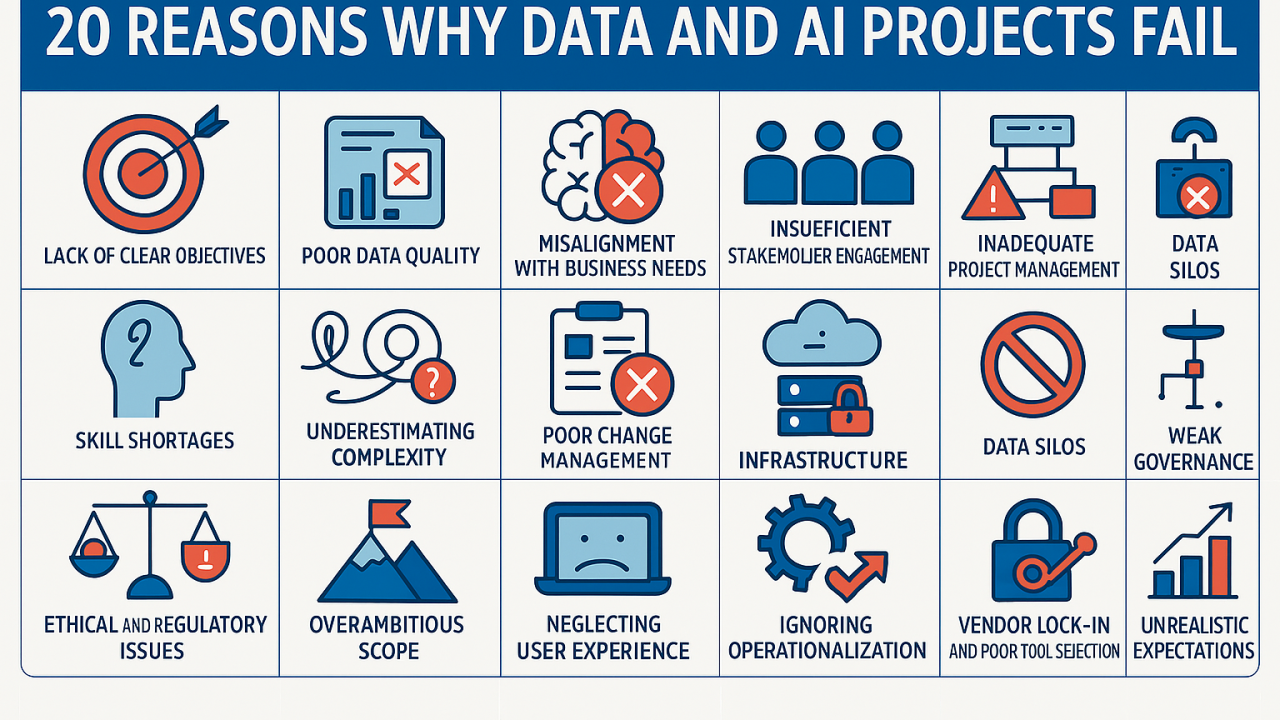
Avoid AI an Data failure, learn from other company's mistakes
Expert guidance for seamless cloud and data transitions. Unlock value, ensure compliance, and lead with confidence.